PCB Conformal Coating Thickness — IPC Standards, Types & Application Methods
Conformal coating adds a thin protective film to a printed circuit board assembly. It helps protect the board from moisture, dust, salt, chemicals, and corrosion. The coating can also reduce the risk of electrical leakage.
PCB conformal coating thickness is important. A film that is too thin may leave weak areas. A film that is too thick may trap solvent or form bubbles. It may also crack during temperature changes.
This guide explains common thickness ranges. It also covers IPC-CC-830, coating types, application methods, measurement, and defects.
What Is PCB Conformal Coating?
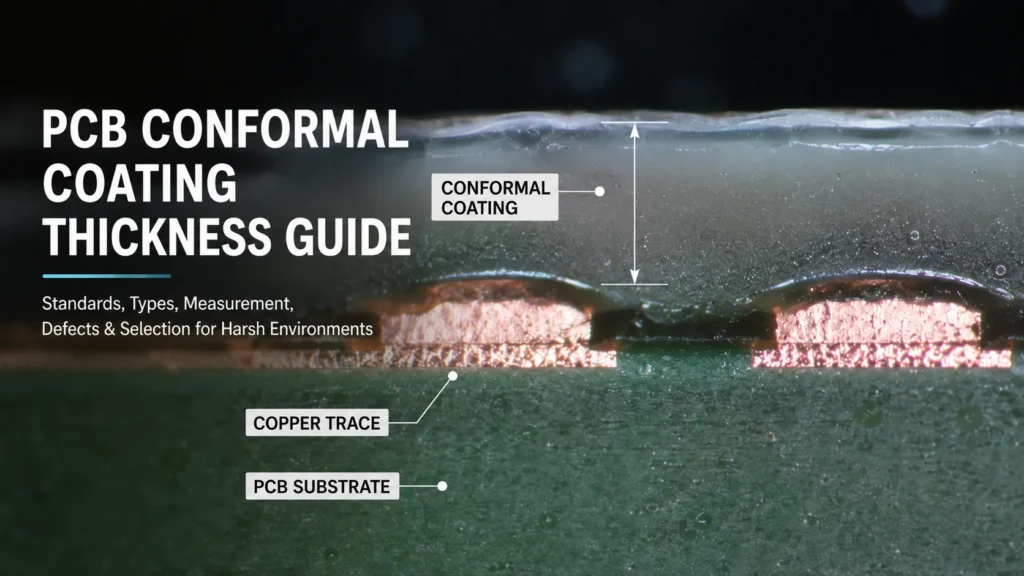
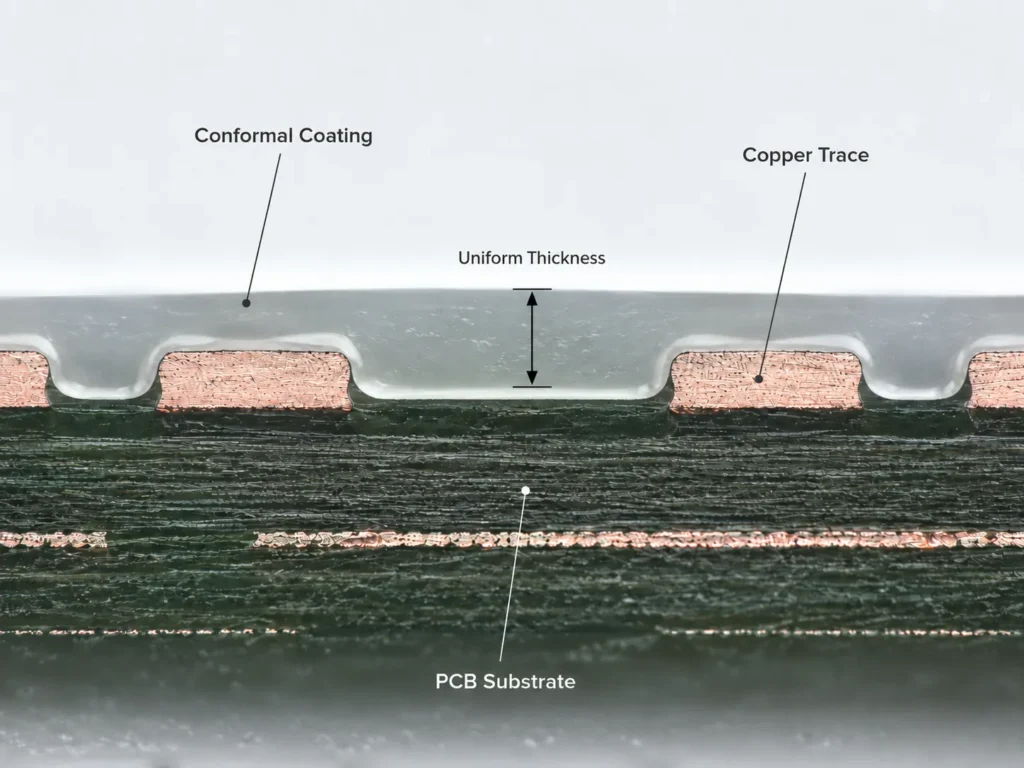
Conformal coating is a thin polymer film. It is applied to an assembled PCB. The film follows the shape of the board, solder joints, tracks, and components.
The coating acts as a protective barrier. It can reduce damage from humidity, condensation, dust, salt, and some chemicals. It is often used in automotive, industrial, marine, outdoor, and medical electronics.
Conformal coating is different from potting. Potting fills a larger space with resin. Conformal coating uses a much thinner film. It adds less weight and allows easier inspection.
The coating is normally applied after assembly and cleaning. Some areas must stay free of coating. These areas may include connectors, test points, switches, heat sinks, and grounding points. Clear masking instructions are therefore important.
Coating is only one part of board protection. It cannot replace a good enclosure. It also cannot correct poor cleaning or weak solder joints. The coating plan should match the full PCB assembly services process.
Conformal Coating Thickness Standards
IPC-CC-830 is a common reference for conformal coating materials. Its full title is “Qualification and Performance of Electrical Insulating Compound for Printed Wiring Assemblies.” The IPC revision table lists IPC-CC-830C as the current published revision.
IPC-CC-830 mainly covers material qualification and performance tests. It does not give one universal coating thickness for every PCB. The correct thickness depends on the coating product and the working environment.
Use the coating supplier’s technical data sheet as the main process reference. Also check the customer drawing and product requirements. The purchase document should state the target dry-film thickness. It should also state the allowed tolerance and measurement points.
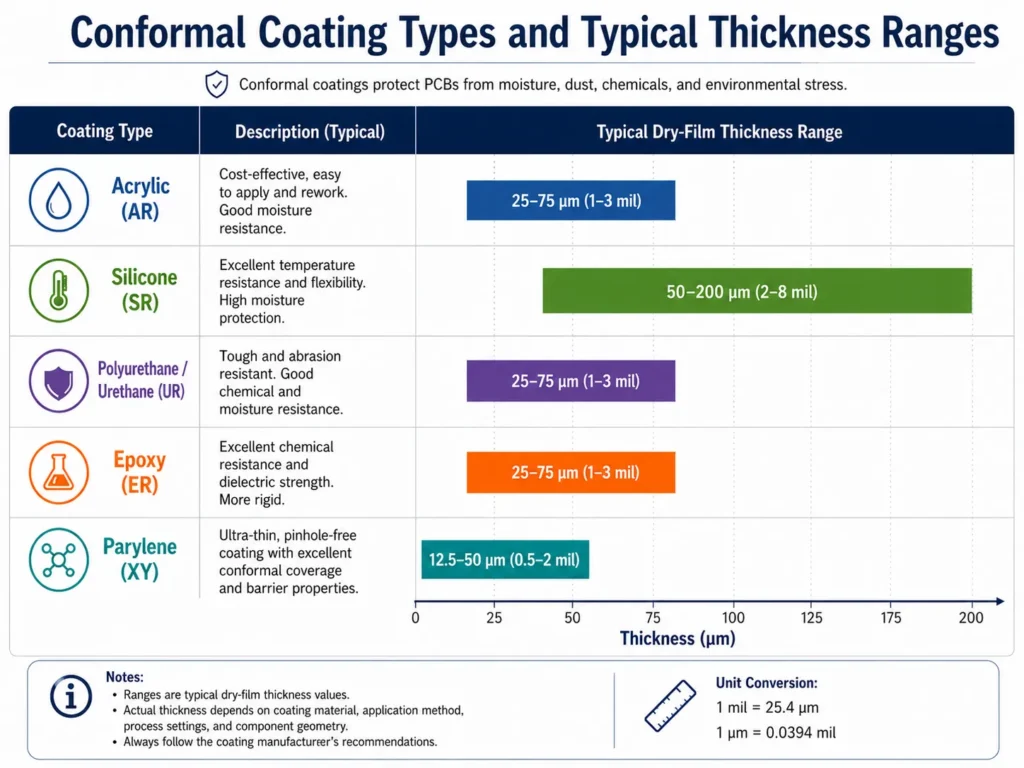
Common dry-film planning ranges for conformal coating
| Coating type | Common code | Typical planning range | Simple guidance |
|---|---|---|---|
| Acrylic | AR | 25–75 µm (1–3 mil) | Common for general protection and easier rework. |
| Polyurethane | UR | 25–75 µm (1–3 mil) | Often used where chemical resistance is important. |
| Epoxy | ER | 25–75 µm (1–3 mil) | Hard and durable, but difficult to remove. |
| Silicone | SR | 50–200 µm (2–8 mil) | Useful for high temperature and thermal cycling. |
| Parylene | XY | Often 0.1–25 µm | Applied by vapor deposition for very thin coverage. |
These values are planning ranges. They are not automatic acceptance limits. Some products need a thinner film. Other products need a thicker film. Always confirm the final value with the material data sheet.
Thickness should normally mean dry-film thickness. Wet-film thickness is measured before the coating cures. The two values are not the same. Solvent loss and solids content change the final result.
One mil equals 25.4 micrometers. Make sure the drawing uses one clear unit. This helps prevent errors between mil and millimeter values.
Official reference: IPC document revision table .
Types of Conformal Coating
Each coating type has different strengths. The best choice depends on the real environment.
Comparison of common conformal coating types
| Type | Main benefits | Main limits | Common use |
|---|---|---|---|
| Acrylic | Fast drying and easy to repair. | Lower resistance to some solvents and high heat. | General electronics and industrial controls. |
| Silicone | Flexible and suitable for wide temperature changes. | Rework and cleaning can be more difficult. | Automotive, power, outdoor, and high-temperature products. |
| Polyurethane | Good resistance to chemicals and abrasion. | Removal may need a controlled process. | Industrial and transportation electronics. |
| Epoxy | Hard film with strong mechanical protection. | Low flexibility and difficult repair. | Products that need permanent protection. |
| Parylene | Very thin and uniform coverage. | Needs vacuum equipment and careful masking. | Dense boards, sensors, medical devices, and high-reliability products. |
Acrylic is often chosen when easy repair is important. Silicone is useful for temperature changes and vibration. Polyurethane gives stronger chemical resistance. Epoxy gives a hard film but is difficult to remove. Parylene gives very thin coverage through a vacuum process.
Technical reference: Specialty Coating Systems guide to Parylene thickness .
How to Measure Conformal Coating Thickness
Thickness should be checked at clear locations. Do not measure only one flat area. The film may be thinner near edges. It may also collect around component leads.
Wet-Film Gauge
A wet-film gauge checks uncured coating. It is useful during process setup. The dry result must be estimated from the solids content. Flow and cure can change the final value.
Dry-Film Coupon
A flat test coupon can be measured before and after coating. The difference gives the dry-film thickness. Coupons are often easier to measure than a complex PCB.
Cross-Section Analysis
A cross-section shows the real coating layer. It can show thin areas, voids, and poor edge coverage. It is a destructive test. It is mainly used for validation or failure analysis.
The inspection plan should define the sample size. It should also define the test points and allowed range. These checks can form part of the wider PCB quality control plan.
Common Application Defects and How to Avoid Them
Common coating defects, causes, and actions
| Defect | Common causes | How to reduce the risk |
|---|---|---|
| Bubbles | Air in the material, high spray pressure, or a thick wet coat. | Mix slowly, control pressure, and use lighter passes. |
| Pinholes | Low film thickness, poor wetting, or surface contamination. | Clean the board and control viscosity and coverage. |
| Uneven thickness | Wrong spray distance, poor drainage, or blocked areas. | Validate the program and check critical locations. |
| Dewetting | Oil, flux, silicone, moisture, or another contaminant. | Improve cleaning and prevent handling contamination. |
| Cracking | Excessive thickness, poor cure, or thermal stress. | Use the approved thickness and cure profile. |
| Coating in a keep-out area | Poor masking, overspray, or an incorrect machine path. | Mark all keep-out areas and inspect the first article. |
UV inspection can help show coating coverage. It does not prove that the film has the correct thickness. It also does not prove that the board works. Electrical and functional checks may still be needed.
Benlida lists functional testing as a PCB assembly capability. The test plan should match the customer’s product and test instructions. Learn more about PCB functional testing.
Conformal Coating for Harsh Environment PCBs
Automotive Electronics
Automotive boards may face heat, cold, vibration, moisture, salt, oil, and fuel. The coating must suit the exact mounting area. A board inside the cabin has different risks from a board near the engine.
Industrial Electronics
Industrial boards may face dust, humidity, corrosive gas, and cleaning chemicals. The coating should protect the board. It should also allow the required repair process.
Marine and Outdoor Electronics
Marine products may face salt and condensation. Outdoor products may face rain, UV light, and large temperature changes. Conformal coating cannot replace sealing and drainage.
Environmental testing should match the real use case. The coated assembly may need thermal, humidity, electrical, or functional testing.
Frequently Asked Questions
What is the standard thickness for acrylic conformal coating on PCB?
A common dry-film planning range is 25–75 µm, or about 1–3 mil. This is not a fixed rule for every acrylic product. Use the coating data sheet and customer drawing for the final value.
Does conformal coating affect PCB dimensions or clearances?
Yes. The coating adds material around the board and component leads. It may affect connectors, test points, heat sinks, and tight enclosures. The drawing should show all keep-out areas.
What is IPC-CC-830 and what does it specify?
IPC-CC-830 is a qualification and performance standard for insulating coating materials. It includes material tests and classification requirements. It does not set one finished coating thickness for every PCB.
Can conformal coating be removed and reapplied?
Many coatings can be removed and applied again. The method depends on the coating chemistry. Acrylic is usually easier to repair. Epoxy and Parylene often need a more specialized process.
Review Your Conformal Coating Requirements Before Production
A clear specification improves process control. Send the coating drawing, Gerber files, BOM, assembly files, and test requirements.
Benlida can review the PCB assembly and testing requirements. The available coating process must be confirmed for the project before production.

